
Is Scuba Diving Hard to Learn?
April Pickens Sep 08, 2026
Short answer: no. You don't need to be an athlete, a strong swimmer, or particularly brave. You need to be comfortable in water and willing to follow instructions.
That said, "not hard" doesn't mean "no effort." Here's what actually goes into learning to dive, so you know what you're signing up for before you book a class.
What the course actually covers
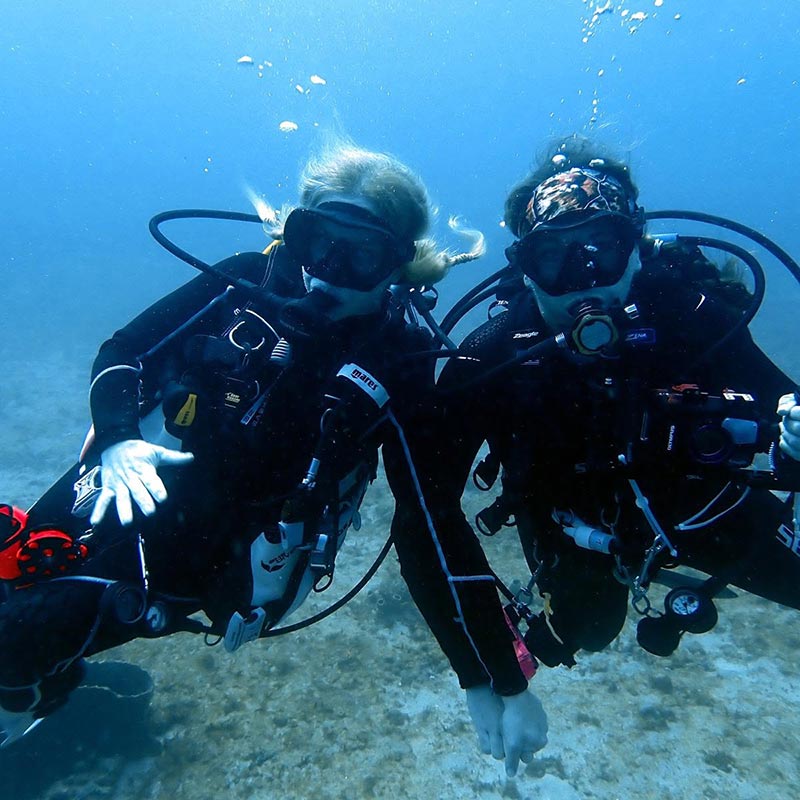 A PADI Open Water certification, the entry-level cert almost every diver starts with, breaks into three parts.
Knowledge development covers the concepts: how pressure affects your body underwater, how to plan a dive, how your gear works. Most shops let you do this part online at your own pace before you ever get in the water.
Confined water training happens in a pool or pool-like setting. This is where you practice the physical skills, clearing your mask, recovering your regulator, controlling your buoyancy, in a controlled, shallow environment with an instructor right next to you.
Open water dives are the final step: four dives in a real dive site, applying what you practiced in the pool. This is usually done over a weekend.
Altogether, most people finish in three to five days, depending on how the shop schedules it. Some people spread it out over a couple of weekends instead of cramming it into one trip.
The swim test, and why it's not as scary as it sounds
Before the diving starts, every PADI course includes a basic water skills check:
- Swim 200 meters continuously (or 300 meters if you're wearing a mask, fins, and snorkel), no stopping, no touching the pool bottom or sides, no flotation aids
- Float or tread water for 10 minutes straight, no flotation aids
There's no time limit on the swim. You can use any stroke you want, at any pace. This isn't a fitness test designed to weed people out. It's a baseline check that you're comfortable enough in water to handle yourself if something unexpected happens. If you can swim casually and float without panicking, you'll clear it without much thought.
What actually trips people up
It's rarely the physical side. The two things that give new divers the most trouble are usually mental.
Equalizing your ears. As you descend, the pressure change means you'll need to equalize your ears every few feet, same as on an airplane, just more frequently. It takes a few tries to get the timing right, but it's a skill, not a talent, and your instructor will walk you through it slowly.
Trusting the gear. Breathing underwater feels unnatural the first few times, even though the regulator is doing exactly what it's designed to do. Most of the "hard" part of learning to dive is mental: getting comfortable enough to breathe normally instead of holding your breath out of instinct.
Neither of these is something you have to figure out alone. A good instructor spends most of confined water training on exactly these two things, because they know that's where people get stuck.
If you're on the fence
If you're not sure diving is for you yet, you don't have to commit to a full certification to find out. A Discover Scuba experience lets you try a guided dive with an instructor, no certification required, so you can see how it feels before deciding whether to go further.
Ready to see for yourself? Book an Experience Scuba Clinic and find out firsthand, no pressure, no commitment.